
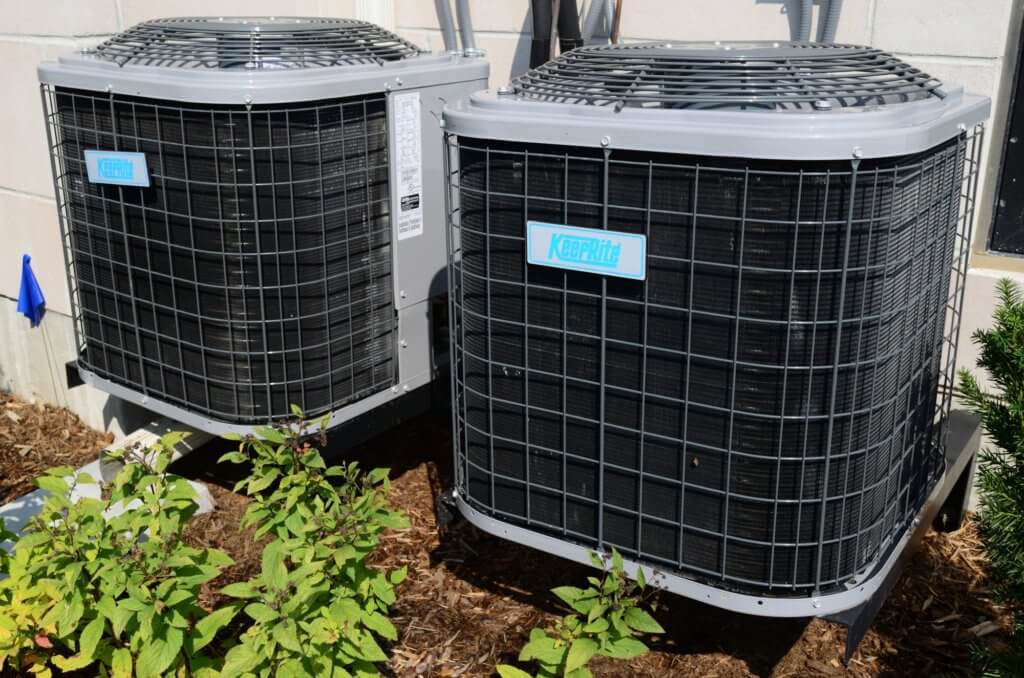
There’s much to consider when first moving into a new home. Don’t let HVAC fall off your list of priorities. Here are some tips on HVAC for beginners.
It is estimated that by 2027, 41 billion devices will be interlinked with the Internet of Things (IoT). Everyone wants smart technology, and HVAC is no exception.
Using IoT, you’ll have easier control over temperatures throughout your home. It won’t matter how hot or cold it is outside.
Perhaps you’ve never used a HVAC system before, and are excited about the prospect. We’ll review HVAC for beginners, with a guide to common HVAC tips and tricks below.
HVAC for Beginners
HVAC is abbreviated for heating, ventilation, and air conditioning. HVAC is a cooling and heating system for your home.
There are nine components of this system. It’s composed of a furnace, heat exchanger, evaporator, coil, and the condensing unit. Additionally, it contains refrigerant tubes, a thermostat, ductwork, vents, and a heat pump.
Know Your HVAC System
The first thing you need to discover is what type of HVAC system you have.
Furnaces are a common heat source for an HVAC system, but some use heat pumps and boilers instead. Find out if your heating unit is powered by electricity, natural gas, oil, or propane.
Does your unit have a ductless mini-system or is it central air conditioning? Does it have a window attached to the wall unit?
Checking any of these will help you figure out how your home is cooled and heated. Moreover, it will give you a rough estimate of how much your heating and cooling bills could cost.
Age of Your HVAC System
HVAC systems tend to last around 10-15 years. If your HVAC system is this old, it should be replaced or repaired before it begins having problems. If your system needs major repairs, it may be cheaper in the long run to simply buy a new one.
If you’re moving into a new place, ask the previous owner how long they’ve had their system.
Efficiency Ratings
If you’re looking to buy a new HVAC system, buy high-efficiency. Mid-efficiency systems may be cheaper at first, but in the long run, high-efficiency systems will save you money.
If you’re not sure what high-efficiency looks like, that’s okay! Check out the different efficiency rating systems on the unit for more information.
The SEER (Seasonal Energy Efficiency Ratio) calculates the cooling capacity of your system. It also measures the electrical input required for your air conditioner. This rating functions as an indicator of how your system will perform in a particular season.
The EER (Energy Efficiency Ratio) rating focuses on how efficient your system is overall. To measure this, it will test the efficiency of your system during peak temperatures.
The HSPF (Heating Seasonal Performance Factor) is comparable to the SEER rating. The only difference being that HSPF is primarily used for heating. This rating specifically applies to heat pumps.
The AFUE (Annual Fuel Utilization Efficiency) rating is like the HSPF rating. However, unlike HSPF, AFUE applies to furnaces and boilers.
Know the Warranty
As a homeowner, you should know the terms of your warranty and what actions could make it void. Make sure you completely understand the terms and conditions outlined within the warranty.
If you’re thinking of moving into a home with a system already in place, talk to the previous owner. Find out how much time is left on the warranty. If there’s no warranty, be aware that any repairs or replacements necessary will have to be payed for.
If you’re installing your HVAC system, make sure you follow the proper procedures. When there is improper maintenance, it can make the warranty void. This is the case, even if time hasn’t run out. For example, skipping annual inspections can make your warranty void.
Maintenance Inspection Results
Before you move in, check how well the HVAC system has performed. Request inspection reports from the previous owner. Typically, these reports will come from the person they hired to maintain the unit.
Having these reports will showcase what problems the system has exhibited in the past; It will give you an idea of what you’ll be working with. Furthermore, it can help you figure out what you’ll need to fix going forward.
If the previous owner doesn’t have inspection reports, that should serve as a red flag. You won’t know how well the unit has been maintained or what kind of shape it’s in.
Other Helpful Tips
Once you’ve moved in, the next step is to consistently maintain your HVAC system to avoid problems. Here are a few helpful tips to be mindful of:
- Change Your Air Filters Regularly.
- Make Sure Your Condenser Unit is Clean.
- Clean Evaporator and Condenser Coils (once or twice a year).
- Keep Your Vents Open.
- Clean Your Ductwork.
- Watch Out for Ice.
- Learn to Use the Thermostat Efficiently.
Schedule Annual Maintenance
Make sure you schedule annual maintenance with a professional. Doing this has many benefits.
One, it will keep your warranty from becoming void. Two, it will help you learn what problems your unit may be having or might have in the future. Lastly, the professional may spot a problem before it develops.
It’s Time to Take Care of Your HVAC System
This was your guide to HVAC for beginners. Hopefully, you can walk away feeling less like a beginner and more like a pro.
In this digital age, there’s always something new to learn; it can be hard to keep up. This will help bring you one step closer to understanding technology.
If you have any further questions or concerns about HVAC systems, call Eyman at (402) 731-2727. Our experienced technicians have experience with both residential and commercial HVAC systems, so we should be able to help!